If your garage door won't open, won't close, or is making a noise that just doesn't sound right, you need a straight answer about what's wrong and what it'll take to fix it — not a runaround.
Professional Garage Door Services is based in Tarzana and provides garage door repair throughout the surrounding San Fernando Valley, including Encino, Woodland Hills, Reseda, Sherman Oaks, Van Nuys, Winnetka, Studio City, Northridge, Canoga Park, and Calabasas. We're licensed, insured, and family owned, and every estimate is free.
24-hour service is available for problems that can't wait, and same-day appointments can often be scheduled when timing allows. Call (888) 285-4021 and we'll walk through what's happening with your door.
What Is Garage Door Repair?
Garage door repair covers the diagnosis and correction of any mechanical or safety issue affecting how your door opens, closes, or holds its position — springs, cables, rollers, hinges, tracks, panels, and the connection between the door and its opener.
Most homeowners need a repair because something has changed: the door got louder, heavier, slower, crooked, or simply stopped responding. These aren't just annoyances. A garage door is one of the largest, heaviest moving objects in a home, and it's built with a counterbalance system — springs and cables under serious tension — specifically so it can be lifted safely. When any part of that system fails, the door stops being predictable.
That's also why garage door repair matters for daily safety, not just convenience. A door that reverses unexpectedly, drops suddenly, or comes off its track isn't just inconvenient — it's a real hazard to people, pets, and vehicles nearby.
As a general guide: if the door feels heavier than usual, makes a loud bang, hangs unevenly, or won't respond to the opener at all, stop using it and call for an inspection rather than continuing to test it yourself.
Common Problems We Fix
Not sure what's wrong? Here's a guide to what you might be noticing — but if in doubt, stop using the door and call us before it gets worse.
Garage door won't open
You may notice: The opener runs, or you try to lift manually, but the door doesn't move — or moves only partway.
Likely cause: Often a broken spring, a snapped cable, or a disconnected opener trolley. Sometimes it's simply a locked manual release.
Why it matters: Forcing a door that won't open can damage the opener, the track, or the door itself, and can be unsafe if a spring or cable has failed.
Garage door won't close
You may notice: The door starts to close and then stops or reverses, or won't respond to the close command at all.
Likely cause: Frequently a sensor alignment issue, an obstruction the safety system is detecting, or a problem with the opener's limit settings.
Why it matters: A door that won't close is a security gap as well as a functional one — worth addressing the same day if possible.
Garage door stuck open or stuck closed
You may notice: The door is fully open or fully closed and won't move in either direction.
Likely cause: Can range from a broken spring or cable to a track obstruction or a failed opener component.
Why it matters: A door stuck open is a security and safety risk; a door stuck closed can trap a vehicle inside. This is exactly the kind of situation emergency service is meant for.
See emergency garage door repairDoor feels unusually heavy
You may notice: Manually lifting the door takes noticeably more effort than before, or the opener strains to move it.
Likely cause: Almost always a spring that's weakening or has already partially failed.
Why it matters: This is a strong warning sign. Continuing to operate a heavy door increases strain on the opener and raises the risk of a sudden, more dangerous failure.
See garage door spring replacementBroken or visibly damaged spring
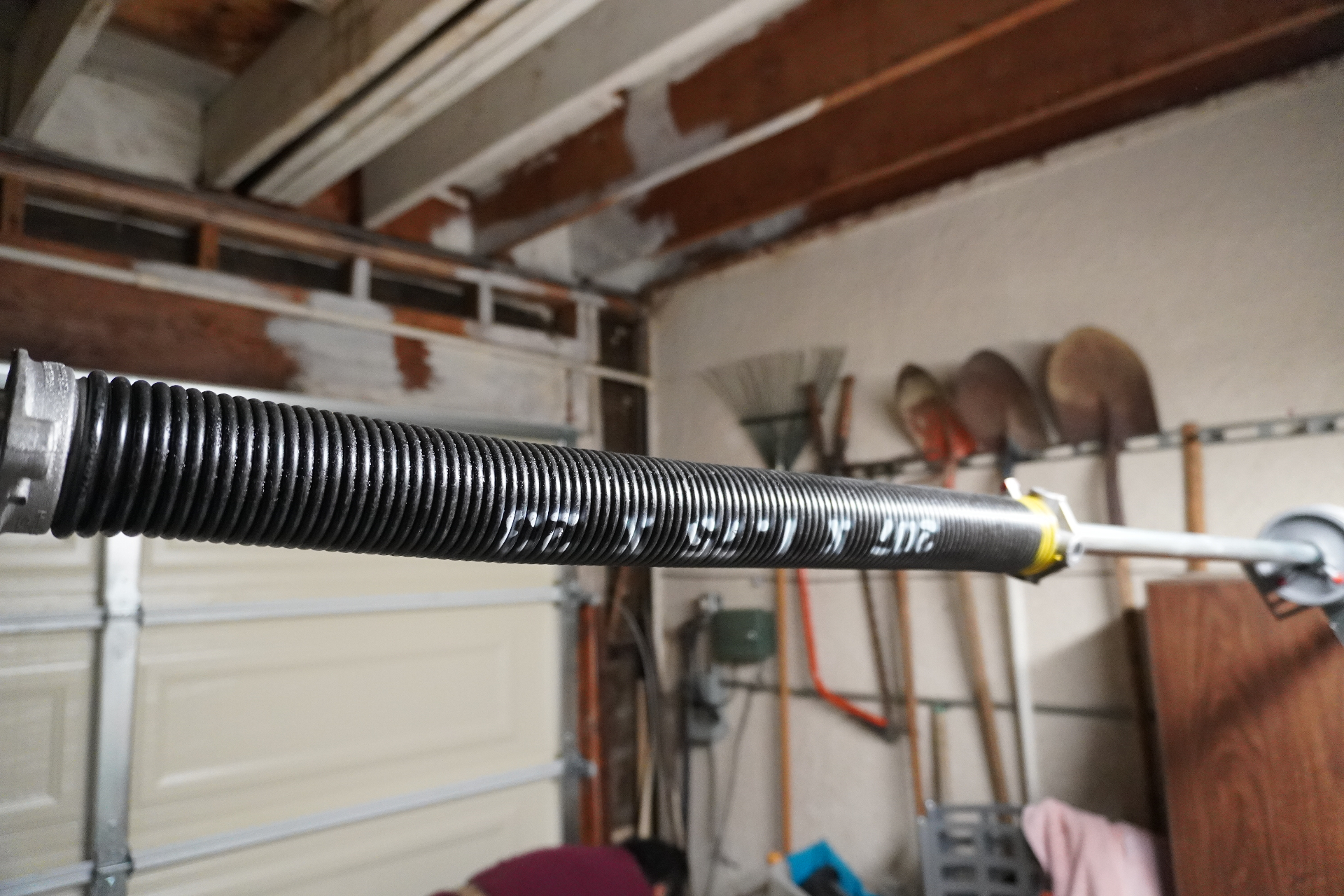
You may notice: A visible gap in the coil, a loud bang from the garage, or a door that suddenly won't lift.
Likely cause: Torsion and extension springs have a rated cycle life and eventually wear out from normal use.
Why it matters: Never unsafe to leave alone temporarily, but unsafe to operate the door or attempt a DIY fix — these springs are under high tension.
See garage door spring replacementFrayed, loose, or snapped cable
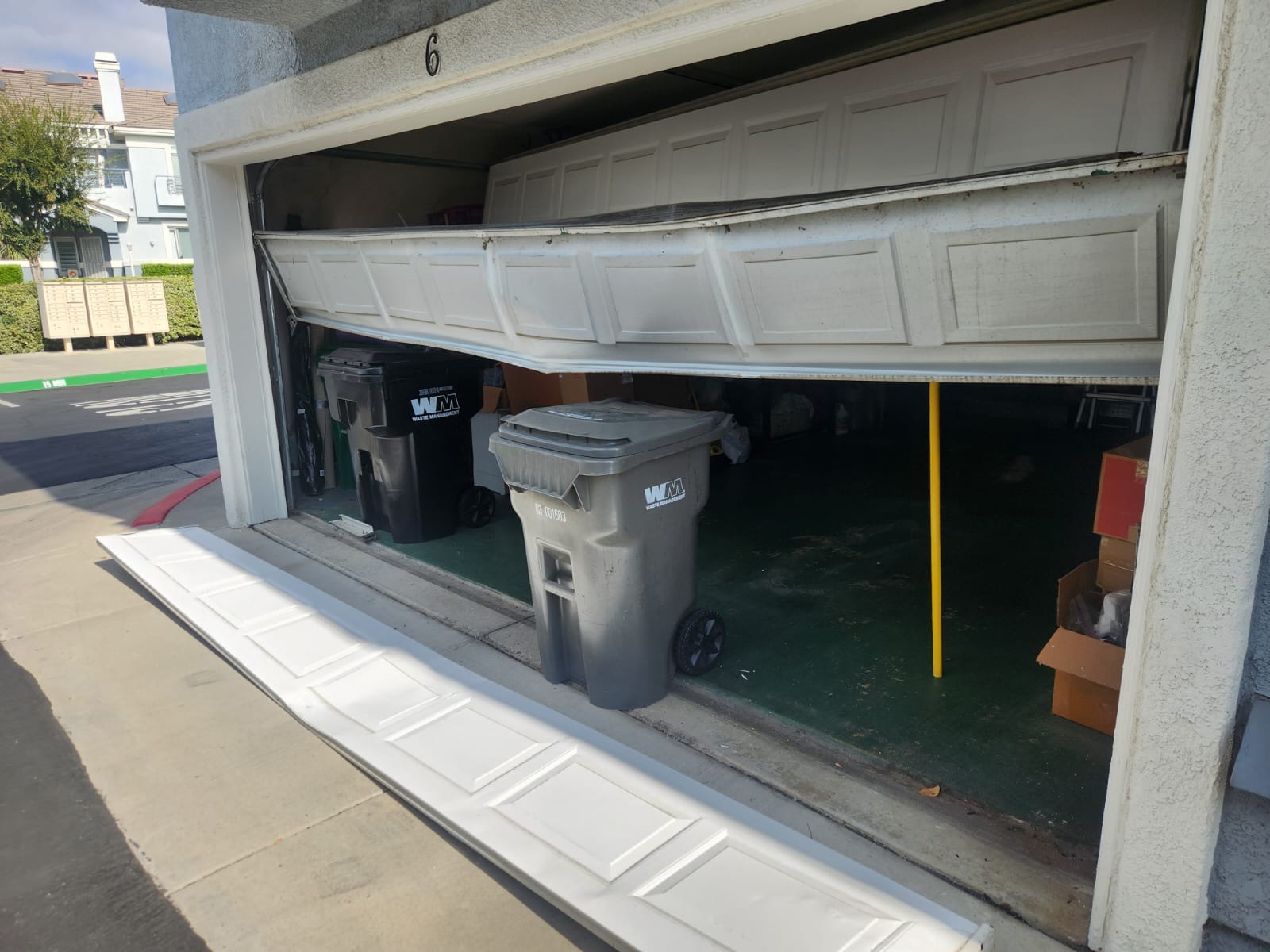
You may notice: A cable hanging loose near the bottom rollers, or a door that hangs crooked on one side.
Likely cause: Cable wear over time, or a cable that's slipped off its drum due to another hardware issue.
Why it matters: A failing cable can let the door drop unevenly. Keep the area clear and avoid operating the door until it's inspected.
See garage door cable repairDoor is off track
You may notice: The door binds, sticks, or visibly leans to one side as it moves.
Likely cause: Often caused by a broken cable, a roller that's jumped the track, or an impact to the door.
Why it matters: Continuing to run an off-track door can cause it to fall or jam completely. Stop use until it's realigned.
See off-track garage door repairLoud grinding, popping, or banging
You may notice: New or worsening noise during operation that wasn't there before.
Likely cause: Usually worn rollers, loose hardware, or a hinge that needs lubrication or replacement.
Why it matters: Not usually an immediate safety issue, but it's a sign of wear that tends to get worse — and cheaper to fix early.
Opener runs but door doesn't move
You may notice: You can hear the motor running, but the door itself stays put.
Likely cause: Common culprits include a broken drive gear, a disconnected trolley, or a spring/cable failure that's separate from the opener itself.
Why it matters: This tells us the problem is mechanical, not electrical — an important distinction for diagnosing it correctly the first time.
See garage door opener repairDoor reverses immediately after closing
You may notice: The door touches the ground or gets close, then reverses back open on its own.
Likely cause: Usually misaligned safety sensors, a close-limit setting that needs adjustment, or an obstruction being detected.
Why it matters: This is a safety feature working as intended, but persistent reversing usually means something needs adjustment or repair.
See garage door opener repairBent, dented, or cracked panels
You may notice: Visible damage to one or more sections of the door, often from an impact.
Likely cause: Vehicle contact, storm damage, or age-related wear on older doors.
Why it matters: Beyond appearance, damaged panels can affect the door's balance and structural integrity — sometimes a single panel replacement solves it without a full door replacement.
See garage door installationIf your door feels unusually heavy, won't stay open, or you see a broken spring or cable, stop using it and keep people and pets clear. A professional inspection is the safer path.
What to Expect During a Repair Visit
Every door and issue is different, but a typical visit includes:
- A full inspection of the door, tracks, springs, cables, rollers, hinges, and opener to identify the actual cause — not just the symptom you're noticing.
- A clear explanation of what's wrong, in plain language, before any repair work begins.
- A discussion of repair options, including straightforward fixes versus more involved repairs, so you understand the tradeoffs.
- The repair itself, using parts matched to your door's size, weight, and usage.
- Balance testing to confirm the door lifts and holds properly once the repair is complete — an unbalanced door will wear out new parts faster.
- Opener testing, including the auto-reverse safety feature, to confirm everything is working correctly together, not just in isolation.
- A final walkthrough so you know what was fixed, what to expect going forward, and whether anything else is worth keeping an eye on.
Repair vs. Replacement
Most garage door problems are fixable without replacing the entire door. A broken spring, a bad cable, worn rollers, or even a damaged panel can often be repaired for a fraction of the cost of a new door.
Replacement becomes the more sensible option when a door has needed repeated repairs, has multiple damaged panels, is significantly out of balance due to age, or simply doesn't insulate or operate the way you need it to anymore.
We'll always give you a straightforward read on your specific door — including whether continuing to repair it makes financial sense compared to replacing it — so the decision is yours to make with good information, not a sales pitch.
Safety Comes First
- Do not force a door that's stuck, heavy, or not responding — stop and call for an inspection.
- Do not attempt to loosen, adjust, or replace spring hardware yourself — these are under high tension.
- Do not remove or bypass safety cables or sensors, even temporarily.
- Keep children and pets away from a door that isn't operating normally.
- If a spring or cable looks broken, avoid using the door at all until it's inspected.
- If the door reverses or won't close, check for an obstruction first, but don't keep forcing repeated attempts.
What Does It Cost?
Garage door repair costs vary based on what's actually wrong — a roller or hinge replacement costs far less than a spring replacement, cable repair, or panel replacement, and larger or custom doors typically cost more to service than standard sizes.
Other factors that affect price include the age and condition of your existing hardware, whether your opener is also affected, how many components need to be addressed at once, and labor time for the specific repair.
We provide a free, no-obligation estimate after inspecting your door, so you know the exact cost before any work begins — not a vague range or a surprise invoice.
Why Homeowners Choose Professional Garage Door Services
Licensed & Insured
Family Owned
24-Hour Service
Free Estimates
We're based in Tarzana, not routing your call to a subcontractor across town. Professional Garage Door Services is licensed, insured, and family owned, with free estimates, 24-hour service, and same-day availability when scheduling allows. We explain repair and replacement options clearly and focus on getting your door working safely — not just quickly.
Areas We Serve
Professional Garage Door Services is based in Tarzana and provides garage door repair throughout the surrounding San Fernando Valley, including Encino, Woodland Hills, Reseda, Sherman Oaks, Van Nuys, Winnetka, Studio City, Northridge, Canoga Park, Calabasas, and nearby communities.
Want details specific to your area? Visit our Tarzana, Encino, or Woodland Hills pages, or contact us for your specific location.
We also serve homeowners in San Diego, CA as a service-area location.