
Garage Door Opener Sensor Problems: Why Your Door Won't Close
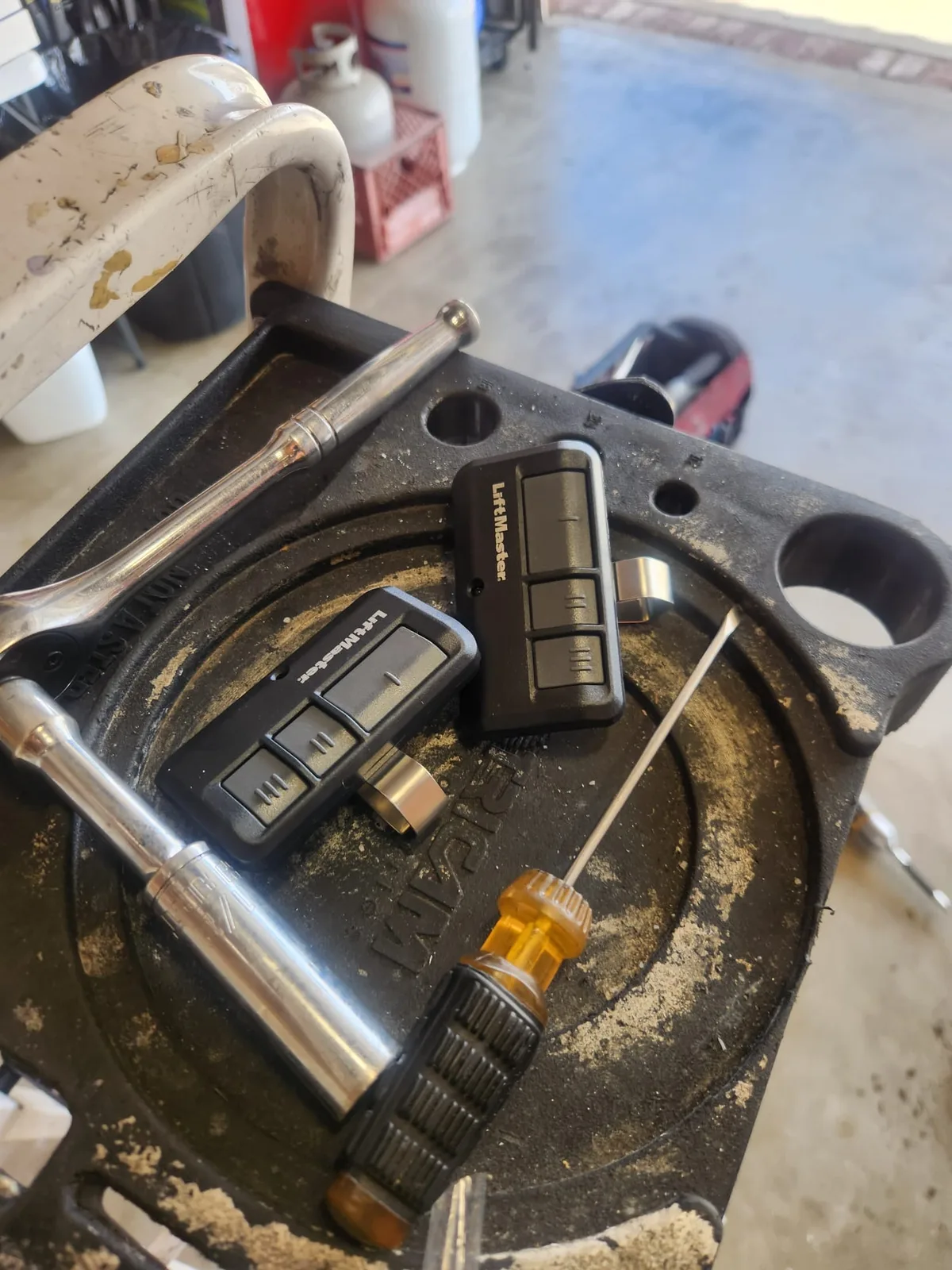
If your garage door starts closing and then suddenly reverses back open — or won't close at all, no matter how many times you press the remote — the safety sensors are almost always the reason. These two small units mounted near the bottom of the tracks, a few inches off the ground on either side of the door, are one of the most important safety features on your garage door. They're also one of the most common sources of frustrating, seemingly random malfunctions.
How Safety Sensors Actually Work
Your garage door has two photo-eye sensors facing each other across the opening. One sends a continuous infrared beam, and the other receives it. As long as that beam is unbroken, the door is allowed to close normally. If something interrupts the beam — a person, a pet, a stray box — the opener immediately reverses the door to prevent it from closing on whatever is in the way. This is federally mandated safety technology, and it's not something you'd want to disable even if you could.
Why Sensors Cause False Triggers
Misalignment: The two sensors need to be pointed at each other with real precision. Even a slight bump — from a stored bike, a broom, or just years of vibration — can knock one out of alignment enough to break the connection intermittently.
Dirt and Dust on the Lenses: A thin film of dust on either sensor's lens can weaken the beam enough to cause false readings, especially in dry, dusty conditions common in the Valley.
Direct Sunlight: Strong, direct sunlight hitting a sensor at certain times of day can actually overwhelm the receiver, causing it to misread the beam status. This is a seasonal issue for some homeowners and tends to happen at the same time each day.
Spider Webs and Small Obstructions: It sounds minor, but a spider web strung across the sensor path is a surprisingly common cause of intermittent reversing.
Loose or Damaged Wiring: Sensors are low-voltage and wired back to the opener. A loose connection, a chewed wire, or corrosion at the terminal can cause a sensor to fail intermittently or completely.
Quick Things You Can Check Yourself
Start by looking at the small indicator lights on each sensor — most units have an LED that should glow solid when properly aligned. If one is flickering or off, that's your first clue. Wipe both lenses gently with a soft, dry cloth to rule out dust. Check that nothing is blocking the space between them, including cobwebs low to the ground. If the sensors seem to work fine at night but fail during the day, sunlight interference is a likely culprit, and repositioning or shading the sensor slightly can sometimes resolve it.
When It's Time to Call a Professional
If you've checked alignment, cleaned the lenses, and ruled out obstructions but the door still won't close reliably, the issue is likely wiring, a failing sensor unit, or a problem with the opener's logic board interpreting the signal. These aren't always safe or straightforward for a homeowner to diagnose without the right tools, especially if it involves opening up the opener unit itself.
A malfunctioning safety sensor isn't just an inconvenience — it's a safety system that's supposed to work every single time. If your door won't close consistently, don't ignore it or disable the sensors as a workaround; that removes an important layer of protection for your family.
If your garage door is giving you trouble with sensors or won't close reliably, give us a call. We'll diagnose the actual cause — alignment, wiring, or a failing unit — and get it working safely again.